Grocery Shopping for Two: What to Buy, How Much, and How to Waste Less
Grocery shopping for two sounds like it should be easy. Fewer people, smaller meals, and theoretically a smaller grocery bill. Except the grocery store doesn’t always cooperate.
Fresh herbs come in bunches when you only need a few sprigs. Recipes call for half a head of cabbage or a small amount of heavy cream. And somehow, buying groceries for two can still leave you with a refrigerator full of forgotten ingredients.
The solution isn’t necessarily better meal planning, more storage containers, or a perfectly organized refrigerator.
It’s learning to buy the right amount of food and make the ingredients you purchase work harder.
Here are some practical ways to shop for two without overspending or throwing away half your groceries.
Affiliate Disclosure: This post contains affiliate links. If you make a purchase through these links, I may earn a small commission at no additional cost to you. As an Amazon Associate I earn from qualifying purchases.
Why Grocery Shopping for Two Can Be Surprisingly Expensive
Most grocery stores sell food in standard package sizes, whether you’re feeding two people or six.
A large bag of spinach may cost less per ounce than a smaller one, but that doesn’t make it a bargain if half goes bad.
The same applies to bread, fresh herbs, dairy products, and produce sold in multipacks.
The real cost of groceries isn’t just what you spend at checkout. It’s what you actually eat.
For example:
- A $5 package of vegetables that you completely use costs $5.
- A $4 package that you only use half of effectively costs $4 for the portion you ate, even though the shelf price looked better.
This is why shopping for two often requires a different approach from shopping for a large family.
1. Plan Around Ingredients, Not Seven Separate Recipes
Planning seven completely different dinners sounds organized, but it can create a surprisingly long shopping list.
One recipe needs parsley. Another needs half a lemon. A third calls for a specific cheese.
Before long, you’re buying ingredients that will only be used once.
Instead, choose a few versatile ingredients and plan multiple meals around them.
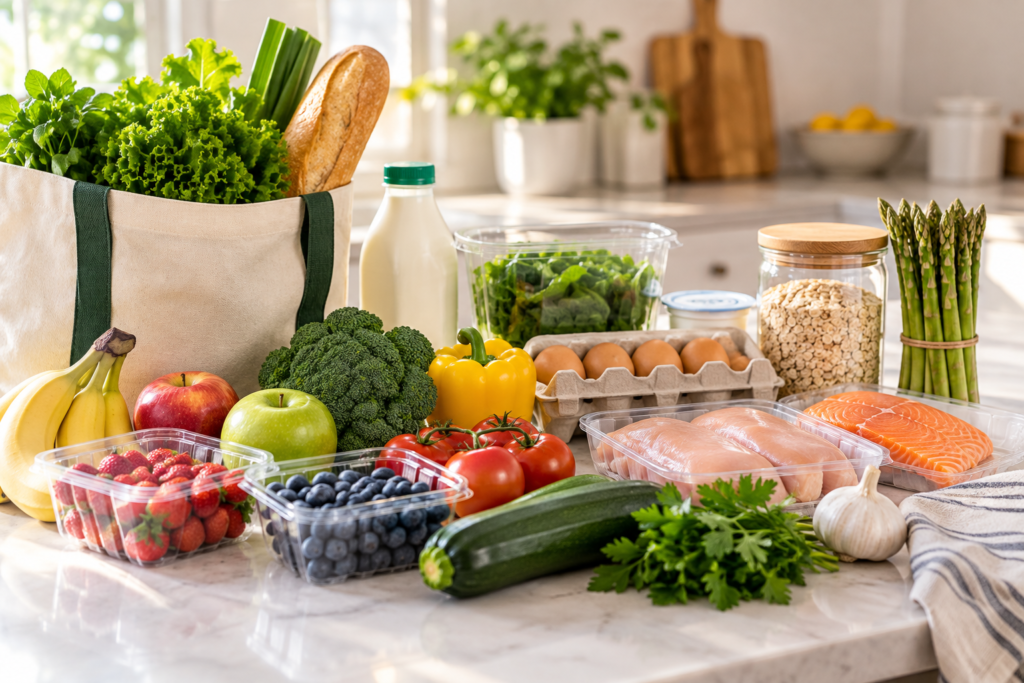
For example, a package of chicken can become:
- Roasted chicken with vegetables
- Chicken wraps with lettuce and tomatoes
- Chicken and rice bowls
A bag of spinach can work in an omelet, a pasta dish, and a salad.
This doesn’t mean eating the same dinner three nights in a row. It means using the same ingredients in different ways.
A simple rule: Before adding an ingredient to your grocery list, ask whether you’ll use it more than once or have a realistic plan for the remainder.
2. How Much Food Should You Buy for Two People?
There isn’t one perfect grocery list for every two-person household. Appetite, dietary needs, meals eaten away from home, and how often you cook all make a difference.
But starting with smaller quantities can help you avoid buying food simply because it’s available in a large package.
Here’s an example of a flexible weekly grocery list for two adults who cook several meals at home.
| Category | Example starting quantity |
|---|---|
| Eggs | 6–12, depending on breakfast habits |
| Chicken or other protein | About 1–1½ lb for two or three shared meals |
| Salad greens | One small package |
| Tomatoes | 3–4 medium |
| Bell peppers | 2 |
| Onions | 2–3 |
| Potatoes | 3–4 medium |
| Fresh fruit | 6–10 pieces, depending on snacks |
| Bread | One small loaf or a freezer-friendly package |
| Rice or pasta | Use what you already have before buying more |
| Milk or yogurt | Smallest economical size you’ll finish |
These are illustrative starting quantities, not nutritional recommendations or a complete week’s food supply. Adjust them based on your actual meals.
The important part is to stop buying the same amount every week out of habit.
If you consistently throw away tomatoes, buy fewer tomatoes next time. If you always run out of eggs, increase that quantity.
Your own kitchen is a better guide than a generic shopping list.
3. Stop Assuming Bulk Buying Always Saves Money
Buying in bulk can save money, but only when you use what you buy.
A large package may have a lower unit price, but that advantage disappears when food spoils.
Consider this example:
| Option | Purchase price | Amount eaten | Effective cost |
|---|---|---|---|
| Large 16 oz package | $4.00 | 8 oz | $0.50 per oz eaten |
| Small 8 oz package | $2.80 | 8 oz | $0.35 per oz eaten |
Although the large package is cheaper per ounce at the store, the smaller package is cheaper if you would otherwise waste half.
Bulk buying works best for foods you use regularly, items with a long shelf life, and products you can safely freeze.
For more ideas, read The Bulk-Buy Repackaging System That Actually Saves Me Money.
4. Buy Fresh Produce According to How Long It Lasts
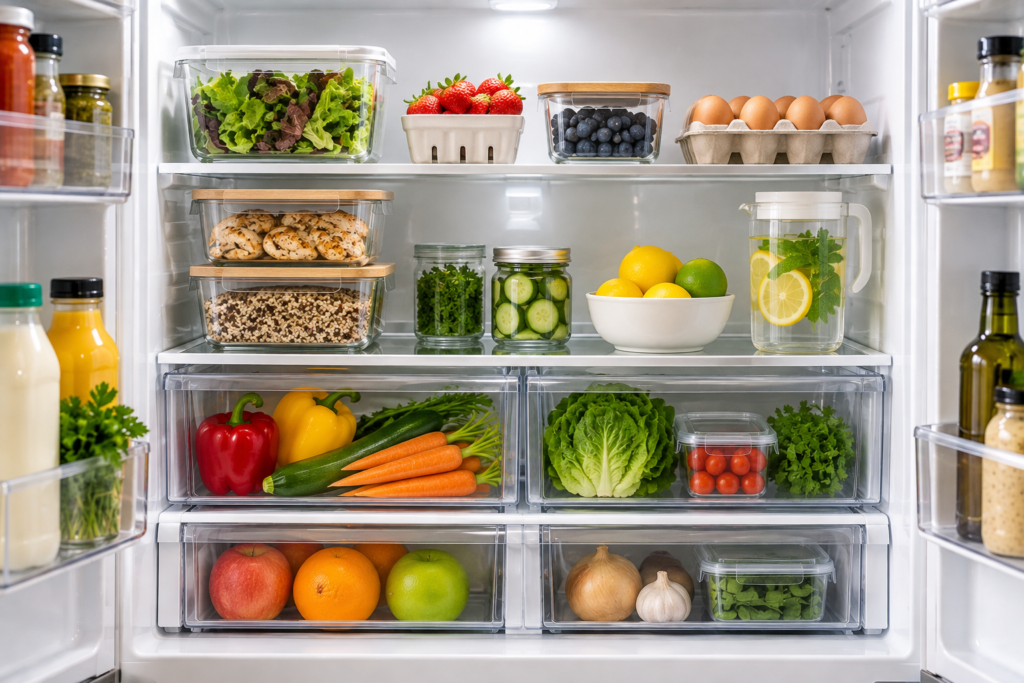
One of the easiest ways to reduce grocery waste is to stop treating all produce as though it has the same shelf life.
Tender greens, berries, and fresh herbs generally need attention sooner than sturdier vegetables.
A practical approach is to plan meals around which ingredients need to be used first.
Early in the week: Use delicate greens, ripe berries, fresh herbs, and other highly perishable ingredients.
Later in the week: Lean on foods such as carrots, cabbage, potatoes, and properly stored frozen vegetables.
Actual storage life varies with freshness, temperature, and handling, so inspect produce and follow food-safety guidance rather than relying only on a calendar.
This small adjustment can prevent that familiar moment when you discover a forgotten bag of slimy spinach.
5. Choose Ingredients That Work in Several Meals
Some foods are especially useful when cooking for two because they can easily move between different dishes.
| Ingredient | Ways to use it |
|---|---|
| Bell peppers | Omelets, stir-fries, fajitas, pasta |
| Spinach | Salads, eggs, soups, pasta |
| Cooked chicken | Wraps, rice bowls, salads |
| Potatoes | Roasted sides, breakfast hash, soup |
| Cabbage | Stir-fries, slaw, soups, sautéed vegetables |
| Plain yogurt | Breakfast, dips, sauces |
The goal isn’t to limit your menu. It’s to get more meals from fewer ingredients.
And if you’re choosing between two ingredients that serve similar purposes, buy the one you already know you’ll use.
For berries and other delicate produce, storage containers with removable draining baskets can help keep excess moisture away while making everything easier to organize in the refrigerator.
6. Keep a Few Reliable Freezer Staples
A freezer can make grocery shopping for two much easier, especially when stores don’t sell the quantities you need.
Useful staples include frozen vegetables, fruit, and proteins divided into portions you’ll actually use.
Reusable freezer bags can make it easier to divide larger packages into smaller portions before freezing.
You can also freeze suitable leftovers for another day rather than feeling obligated to eat the same meal repeatedly.
The key is to freeze food in quantities that match how you cook.
A huge frozen block of soup isn’t particularly convenient when you only want one bowl.
Use freezer-safe packaging, label items with their contents and dates, and follow recommended cooling, storage, and thawing practices.
You don’t need a freezer full of matching containers. You need a system that makes food easy to find and use.
7. Build a Grocery List Around What You Already Own
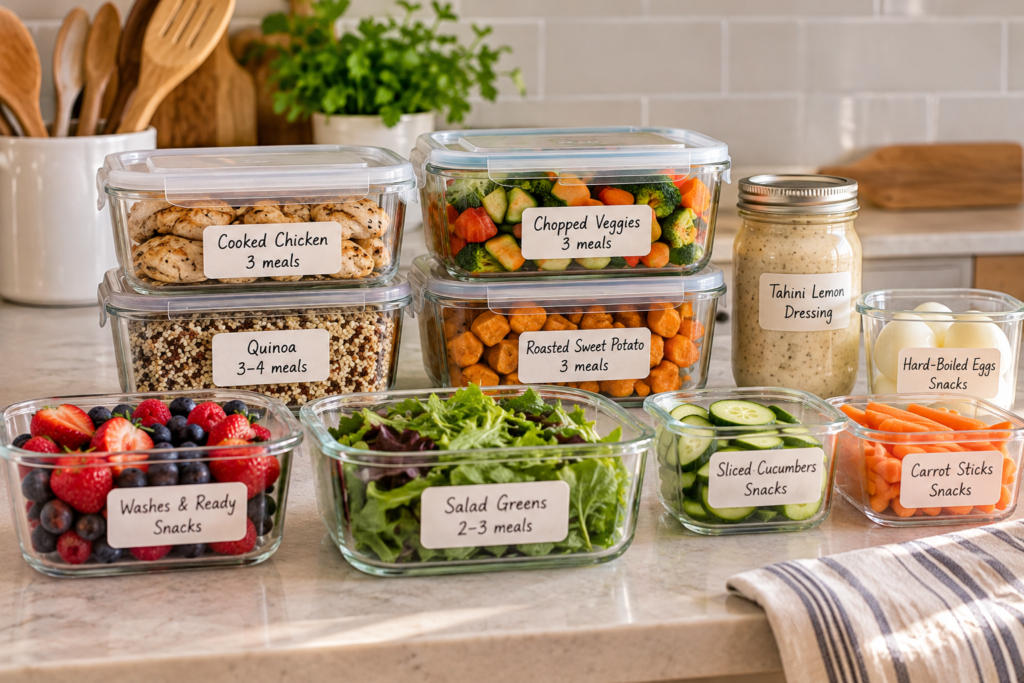
Before writing your grocery list, spend two minutes checking three places:
- Refrigerator
- Freezer
- Pantry
Look for ingredients that need to be used soon.
Then build meals around those items before deciding what to purchase.
For example, if you already have rice, half a bag of frozen vegetables, and a few eggs, you may only need one or two additional ingredients to make dinner.
This approach also prevents buying another jar of something that’s already hiding behind the cereal boxes.
8. Have Two Backup Dinners That Don’t Require Fresh Ingredients
Even the best grocery plan can fall apart.
Plans change. Someone works late. You’re tired. The dinner you planned suddenly sounds like too much effort.
Instead of buying extra fresh ingredients for every possible situation, keep supplies for two simple backup meals.
Examples include:
- Pasta with a shelf-stable sauce and frozen vegetables
- Rice bowls with frozen vegetables and a convenient protein
Choose meals that use ingredients you already keep on hand.
This gives you flexibility without filling the refrigerator with food you might never cook.
9. Use a Flexible Grocery List Instead of Buying Everything Every Week
A helpful grocery list has two parts.
Regular staples: Foods you consistently use, such as eggs, milk, rice, bread, or your preferred breakfast ingredients.
This week’s ingredients: Foods needed for the meals you’ve actually decided to prepare.
You don’t need to replace every staple on every shopping trip.
If there’s enough rice for another two weeks, leave it off the list.
If you still have three apples, buy fewer this time.
The objective is to replenish what you need, not automatically refill every shelf.
10. Keep Track of What You Throw Away for Just One Week
You don’t need a complicated spreadsheet to identify grocery waste.
For one week, make a quick note whenever you throw food away.
Write down what it was and why it went unused.
For example:
| Food | Why it was wasted | What to change |
|---|---|---|
| Salad greens | Bought too much | Choose a smaller package |
| Fresh parsley | Used in only one recipe | Substitute dried herbs when suitable |
| Bread | Couldn’t finish the loaf | Freeze part of it |
| Leftover rice | Forgotten in the fridge | Cool promptly and refrigerate or freeze safely |
At the end of the week, look for patterns.
If the same food keeps getting wasted, change how much you buy or how you plan to use it.
Often, a few small changes make more difference than a complete grocery-budget overhaul.
A Simple Three-Day Dinner Plan for Two
Here’s an example of how shared ingredients can create different meals without requiring a separate shopping list for every dinner.
| Day | Dinner | Shared ingredients |
|---|---|---|
| Monday | Chicken with roasted potatoes and peppers | Chicken, potatoes, peppers |
| Tuesday | Chicken rice bowls with sautéed peppers | Chicken, peppers, rice |
| Wednesday | Vegetable omelets with roasted potatoes | Eggs, peppers, potatoes |
This example assumes you have suitable quantities and refrigerate or freeze cooked ingredients safely. Use refrigerated cooked chicken within the recommended food-safety window or freeze it promptly.
The point isn’t to follow this exact menu. It’s to see how a few thoughtfully chosen ingredients can stretch across several different meals.
Grocery Shopping for Two: Frequently Asked Questions
How much should two people spend on groceries per week?
It depends on where you live, your food preferences, dietary needs, and how many meals you prepare at home. Rather than choosing an arbitrary budget, start by tracking what you spend and waste for a few weeks. Then identify realistic opportunities to reduce unnecessary purchases.
Is it cheaper to grocery shop once a week or several times?
One weekly shopping trip may reduce impulse purchases and save time. However, smaller, more frequent trips can make sense if you have limited refrigerator space or struggle to finish fresh produce. The best schedule is the one that minimizes your total spending, food waste, and unnecessary trips.
How do you grocery shop for two without wasting food?
Plan meals around overlapping ingredients, check what you already own, buy realistic quantities, use perishable foods first, and freeze suitable extras. Tracking what you throw away for one week can help you identify what to change.
Should two people buy groceries in bulk?
Bulk buying can be worthwhile for frequently used pantry staples, household supplies, and foods that freeze well. For highly perishable items, compare the cost of what you’ll actually eat rather than relying only on the package’s unit price.
Final Thoughts
Grocery shopping for two doesn’t have to involve elaborate meal plans, strict budgets, or perfectly arranged refrigerator shelves.
It comes down to a few practical habits: buying realistic quantities, choosing versatile ingredients, checking what you already own, and paying attention to what goes uneaten.
And sometimes the smartest grocery decision is simply buying the smaller package.
Because a bargain isn’t much of a bargain if half of it ends up in the trash.