Is a Mini Rice Cooker Worth It for Two People? What to Know Before Buying
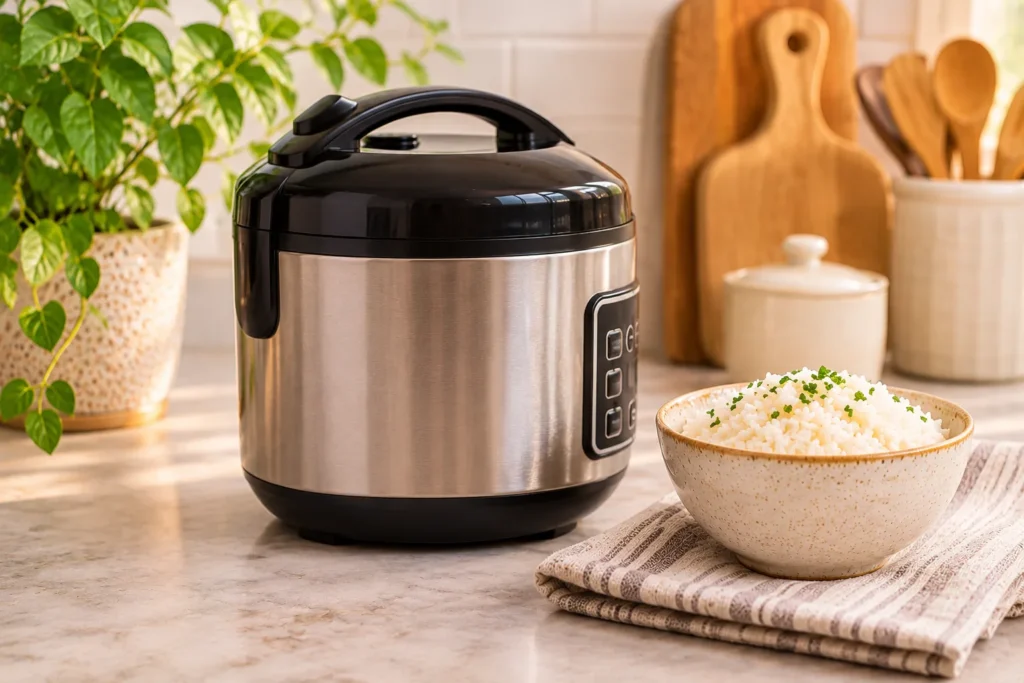
I’ve used both mini and regular-sized rice cookers, and I can see the advantages of each. At home, I use a larger Persian-style rice cooker that makes tahdig, the golden, crispy layer of rice at the bottom. I love that feature, especially when I’m cooking a larger batch. But there are also days when I just want enough rice for dinner, without leftovers sitting in the refrigerator for the next few days. That’s when a mini rice cooker starts to sound rather appealing.
So, is a mini rice cooker worth buying for one or two people? I think it depends less on the size of your household and more on how you actually cook and eat.
Affiliate Disclosure: This post contains affiliate links. If you make a purchase through these links, as an Amazon Associate I may earn a small commission at no additional cost to you.
What Exactly Is a Mini Rice Cooker?
A mini rice cooker is simply a smaller version of a traditional rice cooker, designed for preparing modest portions without taking up much counter or cabinet space.
Most mini models have a capacity of around 1 to 3 cups of uncooked rice, although some manufacturers advertise capacity using cooked rice instead. That distinction matters because rice generally expands to roughly two to three times its original volume when cooked.
A rice cooker advertised as holding three cups of cooked rice is quite different from one that accommodates three cups of uncooked rice.
Another detail worth checking is the measuring cup. Many rice cookers come with their own cup, which is typically smaller than a standard U.S. measuring cup. Following the manufacturer’s measurements helps prevent unpleasant surprises.
Mini rice cookers range from basic one-button appliances to models with digital controls, timers, and additional cooking functions.
1. Why a Mini Rice Cooker Can Be Perfect for Two People
The biggest advantage of a mini rice cooker isn’t necessarily its size. It’s the convenience of making just enough.
When you’re cooking for one or two, preparing a large batch of rice doesn’t always make sense. Yes, leftovers can be useful, but not every meal needs to turn into tomorrow’s lunch.
A mini rice cooker makes smaller portions feel less like an afterthought.
You can prepare rice for dinner while concentrating on the rest of the meal, without constantly checking a saucepan or worrying about the water boiling away.
And because the appliance is compact, it’s easier to find a permanent spot for it in a smaller kitchen.
Making smaller portions is just one way to reduce food waste. A little planning before heading to the grocery store can make a difference, too, especially when you’re shopping for two and trying to avoid buying more than you need.
Less Rice, Fewer Leftovers
Cooking smaller quantities can help reduce food waste, particularly if you prefer freshly cooked rice.
Instead of making more than you need simply because you’re using a large appliance, you can prepare a portion that better matches your appetite.
Of course, a regular rice cooker may also handle small quantities perfectly well. The important thing is to check its minimum recommended cooking amount.
Some larger models aren’t designed to cook very small portions consistently.
2. How Much Rice Does a Mini Rice Cooker Actually Make?
This is probably the most important question to answer before buying one.
Mini rice cookers vary considerably in capacity, and product descriptions aren’t always as clear as they should be.
Here’s a general guide:
| Uncooked Rice | Approximate Cooked Rice | Best Suited For |
|---|---|---|
| ½ cup | 1–1½ cups | One small serving or two modest sides |
| 1 cup | 2–3 cups | Two people, depending on appetite |
| 2 cups | 4–6 cups | Two generous portions with leftovers |
| 3 cups | 6–9 cups | Several servings or meal preparation |
These are approximate yields using standard U.S. measuring cups. Actual results depend on the type of rice and cooking method.
For two people who usually eat rice as a side dish, a cooker that handles one cup of uncooked rice may be sufficient.
But if rice is the main part of the meal, or you enjoy having enough for seconds, a slightly larger capacity may be more practical.
My advice: Don’t buy the smallest rice cooker simply because you’re cooking for two. Think about how much rice you actually put on the table.
3. Mini Rice Cooker vs. Regular Rice Cooker: What’s the Difference?
Both appliances do essentially the same job, but they serve slightly different needs.
| Feature | Mini Rice Cooker | Regular Rice Cooker |
|---|---|---|
| Portion size | Better suited to smaller batches | Better suited to larger batches |
| Counter space | Usually takes up less room | Generally requires more space |
| Storage | Easier to store in small cabinets | Can be bulkier |
| Cooking time | Depends on model and rice quantity | Depends on model and rice quantity |
| Features | Basic to multifunctional | Basic to multifunctional |
| Entertaining | Limited capacity | More practical for guests |
| Price | Often less expensive | Wider price range |
One thing I wouldn’t assume is that a mini rice cooker always cooks faster.
Cooking time depends on the appliance, the amount and type of rice, and the cooking program. A smaller machine doesn’t automatically mean dinner will be ready sooner.
The real advantage is usually convenience and portion control rather than dramatic time savings.
4. What About Tahdig and Other Rice Cooking Preferences?
Not everyone wants the same result from their rice cooker.
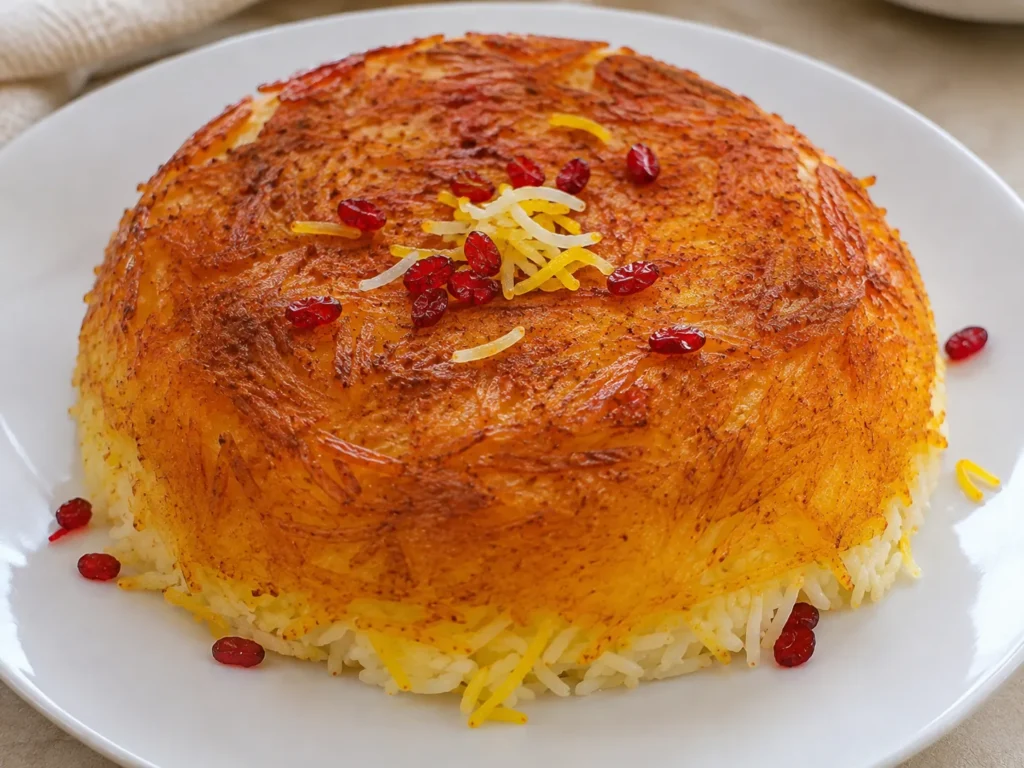
Some people prefer soft, fluffy rice. Others enjoy a slightly firmer texture, and some of us love tahdig, the crispy golden rice crust that forms at the bottom.
My regular rice cooker is a Persian-style model designed to make tahdig, and that’s one reason I wouldn’t want to replace it entirely with a basic mini cooker.
Most ordinary mini rice cookers are designed to cook rice evenly rather than deliberately create a crispy bottom.
That doesn’t mean a mini cooker is inferior. It simply has a different purpose.
If you regularly prepare Persian rice or enjoy a particular rice texture, check whether the model you’re considering supports that cooking style.
And remember, not all regular-sized rice cookers make tahdig either. It’s a feature associated with specific models and cooking methods, not simply the size of the appliance.
If crispy, golden tahdig is something you enjoy, a rice cooker designed specifically for Persian rice is worth considering. The Sadaf Persian Rice & Tahdig Cooker has a simple one-touch design with an adjustable cooking dial that helps create the golden crust at the bottom of the pot. It’s a different option from a typical mini rice cooker, particularly for anyone who prefers Persian-style rice.
5. Can You Cook Anything Besides Rice in a Mini Rice Cooker?
One appealing feature of some mini rice cookers is their versatility.
Depending on the model, you may be able to prepare:
- Oatmeal or porridge
- Quinoa and other grains
- Small portions of steamed vegetables
- Simple soups
- Certain one-pot meals
This can be especially useful when you’re preparing a quick lunch or cooking for yourself.
However, not every mini rice cooker is designed for all these foods.
A basic rice cooker with a single cooking switch may have different capabilities from a multifunctional model with dedicated settings.
Always follow the manufacturer’s instructions, particularly when preparing foods that foam, expand, or require specific cooking temperatures.
And while some online recipes suggest cooking almost anything in a rice cooker, that doesn’t mean every appliance is suitable for every recipe.
6. What to Look for Before Buying a Mini Rice Cooker
A mini rice cooker doesn’t need an impressive list of features to be useful. In fact, the simplest model may be exactly what you need.
Here are the details worth paying attention to.
Capacity That Matches Your Portions
Look for the amount of uncooked rice the cooker can handle, along with its minimum cooking quantity.
If you usually prepare rice for two people, consider whether the capacity allows for occasional larger servings.
Easy Cleaning
A removable inner pot with a suitable nonstick coating can make cleanup easier.
Check whether the lid or steam components can be removed for cleaning. Some compact appliances have fixed lids that require more careful attention.
Keep-Warm Function
A keep-warm setting can be useful when the rest of dinner isn’t quite ready.
However, it’s important to follow the manufacturer’s guidance for how long cooked rice can safely remain in the appliance. A keep-warm setting should maintain a food-safe temperature rather than simply leaving rice lukewarm.
Counter and Cabinet Space
Mini rice cookers are generally compact, but their shapes vary.
A tall model may fit easily on the counter yet be awkward to store under a low shelf.
Check the actual dimensions rather than relying on product photos.
Simple Controls
For everyday rice cooking, a straightforward cook-and-warm switch may be all you need.
Digital settings can be helpful if you regularly prepare different grains or want more control, but they aren’t automatically necessary.
7. When a Mini Rice Cooker Might Not Be Worth Buying
Despite their advantages, mini rice cookers aren’t for everyone.
You may be better off keeping a regular-sized cooker if:
- You frequently cook rice for guests or family gatherings.
- You prefer making enough rice for several meals.
- Your existing cooker handles small portions well.
- You rarely eat rice and don’t want another appliance taking up space.
There’s also the question of whether you really need two rice cookers.
If your current appliance already makes small portions successfully, buying a mini version may not offer enough additional convenience to justify the expense.
A smaller appliance is only a space-saving solution if you actually have somewhere to put it.
8. Is a Mini Rice Cooker Worth Having Alongside a Regular One?
This is where I find the idea particularly appealing.
Having a regular rice cooker doesn’t necessarily mean a mini one would be redundant.
There are days when you want to prepare a generous batch of rice, especially for a family meal or a dish that deserves a good layer of tahdig.
And then there are ordinary evenings when you just want a little fresh rice to go with dinner.
A mini cooker could be useful for those smaller meals, particularly if your regular cooker doesn’t perform as well with very small quantities.
But I wouldn’t rush to buy a second appliance without first checking what my existing one can do.
If the regular cooker handles half a cup or one cup of uncooked rice successfully, that may already solve the problem.
And even if it doesn’t, there’s always the option of cooking a small portion in a saucepan on the stovetop. If you only need a little rice occasionally, that might be the more sensible choice. After all, not every kitchen problem needs another appliance to solve it.
On the other hand, if you frequently cook smaller portions and prefer the convenience of a rice cooker, having a mini one alongside your regular model could be well worth it.
9. Which Type of Mini Rice Cooker Should You Choose?
Rather than concentrating on brand names alone, I would start with three general categories.
Basic Mini Rice Cooker
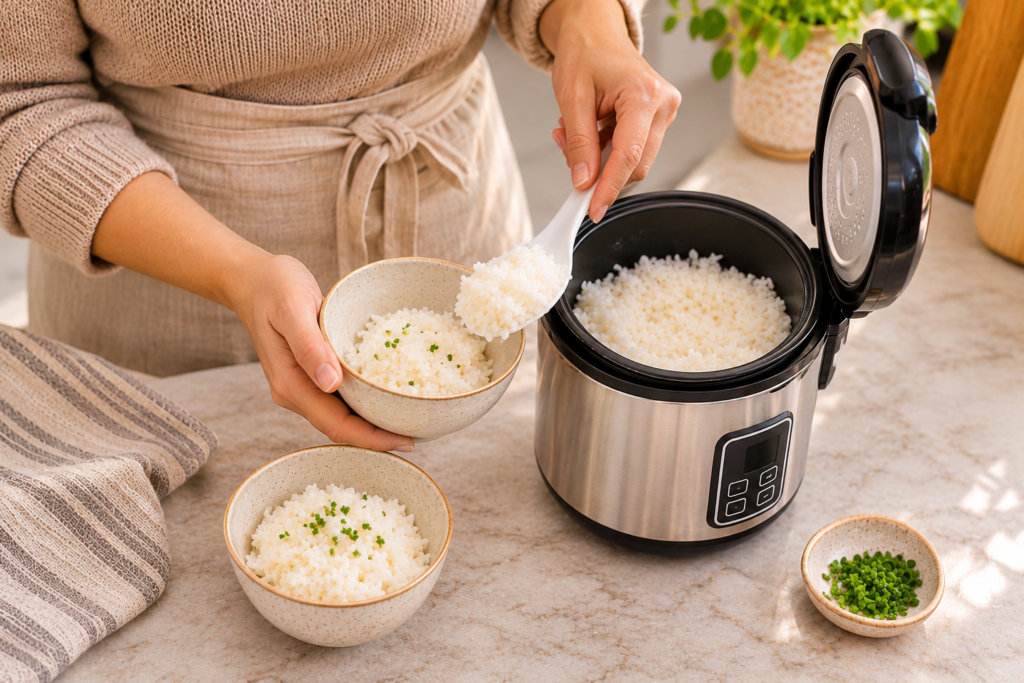
Best for someone who primarily wants simple white rice in small portions.
These models typically have straightforward controls and fewer cooking programs.
They’re often a practical choice if you value simplicity over extra features.
For anyone who prefers a simple, affordable option, the AROMA Mini Rice Cooker is worth considering. It makes up to four cups of cooked rice, has an automatic keep-warm function, and doesn’t require navigating complicated settings. It’s a practical choice for smaller households that want freshly cooked rice without investing in a larger appliance.
Slightly Larger Compact Rice Cooker
Worth considering if you’re cooking for two people but occasionally want larger portions or leftovers.
This can be a sensible compromise between a tiny cooker and a full-sized appliance.
If you prefer a little more flexibility, the AROMA Digital Rice Cooker is a practical alternative. It makes up to 8 cups of cooked rice and includes settings for different types of rice, steaming, and delayed cooking. It’s a good option for smaller households that occasionally need to prepare larger portions.
10. A Few Questions to Ask Before You Buy
Before adding another appliance to your kitchen, consider these questions:
- How much uncooked rice do I normally prepare?
- Do I prefer freshly cooked rice or intentionally make leftovers?
- Can my existing cooker handle small quantities?
- Do I need special cooking functions?
- Where will I store the appliance?
- Will I use it often enough to justify buying it?
If you can answer those questions, choosing the right rice cooker becomes much easier.
Final Thoughts: Is a Mini Rice Cooker Worth It?
For one or two people, a mini rice cooker can absolutely be worth considering.
It’s compact, convenient, and well suited to preparing smaller quantities without making more rice than you need.
But household size alone shouldn’t determine your choice.
If you enjoy cooking larger batches, frequently entertain, or rely on a specialized rice cooker for dishes like tahdig, a regular-sized model may still be the better fit.
And if you’re considering buying a mini cooker alongside the one you already own, think about whether it solves a genuine problem.
Sometimes a smaller appliance is exactly what makes everyday cooking easier. Other times, it’s simply another thing to find room for in the cabinet.
The best rice cooker isn’t necessarily the smallest or the most expensive. It’s the one that makes the amount of rice you actually want to eat, the way you like to eat it.