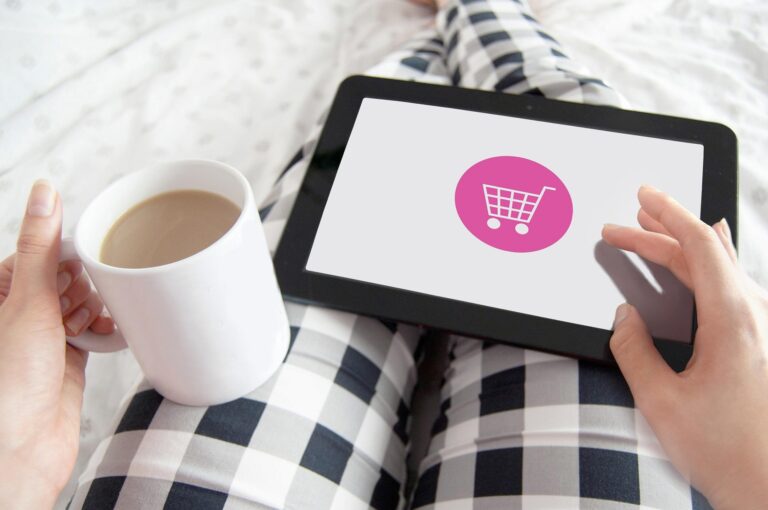
How to Stop Impulse Buying Online (Without Giving Up Shopping)

Learning how to stop impulse buying online would be considerably easier if online shopping weren’t designed to make buying something so incredibly easy.
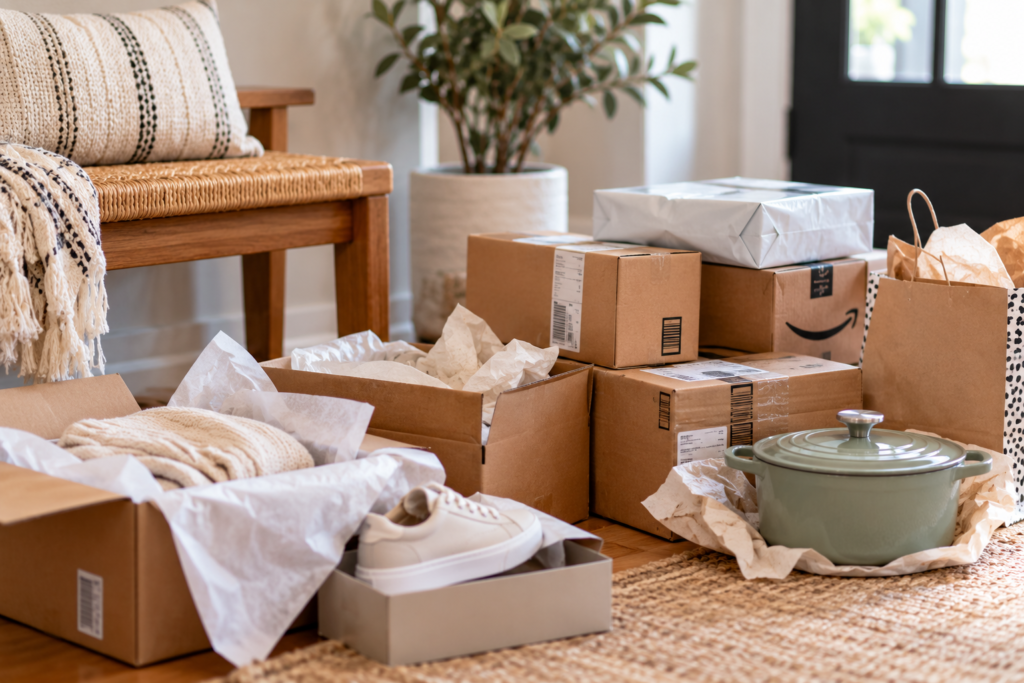
One minute you’re checking the price of laundry detergent. Ten minutes later, there’s a package coming Thursday containing the detergent, a storage container you didn’t know existed, and a pair of shoes that were apparently too good a deal to leave behind.
None of this means you have to stop shopping.
The goal isn’t to become the person who agonizes over every $12 purchase or refuses to buy anything remotely fun. It’s simply to put a little space between I want that and Order confirmed.
Because online shopping has become very good at removing that space.
Why Is It So Easy to Impulse Buy Online?
Think about how little effort it takes to buy something now.
Your address is saved. Your card is saved. One button completes the purchase. Sometimes you don’t even have to leave the social media app where you discovered the product.
Then there are the messages designed to create urgency:
Only 2 left.
Sale ends tonight.
Someone else has this in their cart.
Spend $14 more for FREE shipping.
That last one deserves its own category.
There’s something deeply irrational about adding a $20 item to an order because paying $6 for shipping suddenly feels unacceptable.
I’ve fallen for it enough times to know.
The easier buying becomes, the more useful it is to create a few little obstacles of our own.
1. Stop Using “Buy Now”
One-click purchasing is wonderfully convenient when you’re replacing the exact shampoo you’ve used for five years.
It’s considerably less helpful when you’re considering a countertop gadget you discovered seven minutes ago.
Instead of buying immediately, put the item in your cart.
Then leave.
You haven’t said no. You’ve simply delayed the decision.
Come back tomorrow and see whether you still want it.
It’s surprising how often yesterday’s I need this becomes today’s Why is that in my cart?
2. Keep a “Buy Later” List
This works especially well for things that aren’t necessities.
Instead of purchasing something when you first see it, save it to a list.
Write down:
- What it is
- How much it costs
- The date you found it
Then wait.
For smaller purchases, a couple of days may be enough. For something more expensive, give it a week or longer.
If you still genuinely want it after the waiting period, buying it doesn’t automatically make it a bad purchase.
But you’ll probably be surprised by how many things disappear from the list without you ever buying them.
The desire was real.
It just wasn’t very durable.
3. Don’t Shop Because You’re Bored
This one can be sneaky because sometimes it doesn’t even feel like shopping.
You’re sitting on the sofa watching television and open Amazon “just to look.”
Or you scroll through Instagram and see a kitchen organizer.
Then a dress.
Then somebody demonstrating a cleaning gadget that apparently solves a problem you’ve managed to live with perfectly well for 20 years.
Before long, browsing has turned into buying.
If you’re not actually looking for something, shopping apps probably aren’t the best entertainment.
That doesn’t mean deleting every app on your phone. It can be as simple as noticing when you’re shopping because you need something and when you’re shopping because there’s nothing else happening.
Those are very different shopping trips.
4. Make Free Shipping Do the Math
Free shipping is one of my personal weaknesses.
I’ve already written about how “free shipping” gets me every time, because apparently paying more money to avoid paying for shipping can feel completely reasonable in the moment.
Here’s the rule I’ve started using:
Compare the extra purchase with the actual shipping charge.
If shipping is $6 and you need to spend another $18 to get it free, you aren’t saving $6.
You’re spending another $12.
Obviously, if there’s something else you genuinely need, adding it can make sense.
But buying a random candle, storage bin or T-shirt solely to cross the threshold isn’t free shipping.
It’s an upsell with very good branding.
5. Stop Treating a Discount Like Savings
This may be one of the oldest shopping tricks in existence, and it still works.
Originally $80. Now $39.99.
Immediately, it feels like you’re saving $40.
But you’re only saving $40 if you were already going to buy that particular $80 item.
Otherwise, you’re spending $39.99.
Sales aren’t bad. I love getting something I actually need for less.
The problem starts when the discount becomes the reason for buying it.
Try asking:
Would I still want this if there were no sale sign next to it?
That one question eliminates a surprising number of “bargains.”
6. Unsubscribe From the Stores That Know Your Weakness
Retail emails have one job.
To get you back into the store.
They don’t email because they were wondering how you’re doing.
They’ve got 30% off.
Your rewards are expiring.
There’s early access.
Something you looked at three weeks ago is suddenly on sale.
You don’t necessarily need to unsubscribe from every retailer. But if there’s a particular store that regularly turns an innocent email check into a $75 order, unsubscribe.
The sale can still exist without you knowing about it.
7. Remove Shopping Apps From Your Home Screen
You don’t necessarily have to delete them.
Just make them slightly less convenient.
Move Amazon, Target, your favorite clothing apps and whatever else tends to tempt you off the first screen of your phone.
Put them in a folder.
Make yourself search for them.
This sounds almost ridiculously small, but that’s the point.
Online shopping works partly because there is almost no friction between seeing something and buying it.
Adding even a tiny bit of friction gives your brain another moment to decide whether you actually want to shop.
8. Leave Things in Your Cart
Retailers may not love this advice.
Your cart does not have to become an immediate checkout line.
Let it become a waiting room.
Put things in there. Close the website. Go make dinner.
If you’re still thinking about the item tomorrow, take another look.
Sometimes you’ll buy it.
Sometimes you’ll open your cart and have absolutely no idea what possessed you.
Both outcomes are useful.
9. Ask Where It’s Going to Live
This is particularly effective with home decor, kitchen gadgets, organizers and clothing.
Before buying something, ask:
Where exactly am I going to put this?
Not vaguely.
Exactly.
Which cabinet?
Which shelf?
Which wall?
Which part of the closet?
If the answer is I’ll figure it out, that’s worth noticing.
A bargain becomes considerably less exciting when you realize you’re about to bring home another object that needs to be stored, organized, cleaned or eventually decluttered.
10. Watch the Little Purchases
Big purchases usually get our attention.
It’s the smaller ones that can slip through unnoticed.
$14.99 doesn’t feel particularly significant.
Neither does $22.
Or $9.
But several small impulse purchases scattered throughout a month can become a surprisingly large number.
You don’t need a complicated spreadsheet to notice this.
For one month, simply look back through your online orders and identify the things you bought without planning to.
Don’t judge them.
Just total them.
That number may tell you more than any budgeting rule could.
11. Make It Slightly Harder to Pay
If impulse buying is a recurring problem, consider removing your saved payment information from the stores where it happens most often.
Having to get up, find your wallet and type in a card number isn’t exactly a major hardship.
But that’s the idea.
You want a small interruption.
The internet has spent years making checkout faster.
Sometimes slower is useful.
12. Give Yourself Permission to Buy Things You Actually Want
This might be the most important part.
Trying to stop impulse buying doesn’t mean every unnecessary purchase is irresponsible.
We are allowed to buy things because they’re beautiful.
We’re allowed to buy a ridiculous serving bowl that makes us happy.
We’re allowed to replace something that technically still works because the new version makes everyday life easier.
And we’re allowed to occasionally buy something completely unnecessary just because we want it.
The difference is choosing the purchase rather than being hurried into it.
How to Stop Impulse Buying Online Without Making Shopping Miserable
You don’t need 17 rules before you’re allowed to click checkout.
Start with one.
Maybe you wait 24 hours before buying anything you didn’t intend to shop for.
Maybe you stop adding random items just to reach free shipping.
Maybe you move the shopping apps off your home screen.
Maybe you simply start asking:
Would I have gone looking for this if it hadn’t appeared in front of me?
That’s often enough to tell the difference between something you actually want and something you were very effectively persuaded to want.
The goal isn’t to never impulse buy again.
It’s to make sure that when a package arrives on Thursday, you remember why you ordered it.