How to Get Rid of Paper Clutter Without Overcomplicating It
Paper clutter is strangely good at taking over a home while barely taking up any space.
A few envelopes on the kitchen counter. Receipts shoved into a drawer. A form waiting for a signature. An instruction manual you’re not sure you should throw away. A stack on the desk that has been sitting there so long you barely notice it anymore.
None of these things seems particularly troublesome on its own. But put them together and suddenly there’s paper everywhere — and every pile feels like something you should be dealing with.
That’s what makes paper clutter different from a lot of other household mess.
Most paper isn’t simply waiting to be put away. It’s waiting for a decision.
Do I need this?
Do I need to do something with it?
Should I keep it?
Where does it go?
Can I finally throw it away?
The longer we postpone those little decisions, the bigger the piles become.
Getting rid of paper clutter doesn’t require a complicated filing system, a label maker or an afternoon spent alphabetizing folders. What helps much more is giving paper fewer places to collect and having a simple way to decide what happens to it.
Why Paper Clutter Feels So Overwhelming
Think about most everyday clutter.
A coffee cup belongs in the kitchen. Shoes go in the closet. A jacket gets hung up.
The decision is already made.
Paper is different.
An envelope might contain a bill that needs paying. A receipt could be needed for a return. A medical statement needs checking. A form needs signing. A flyer can probably go straight into recycling — although now you’re wondering whether you wanted the coupon on the back.
So when you look at a pile of paper, you’re not just looking at clutter. You’re looking at a collection of things you haven’t decided what to do with yet.
That’s one reason paper clutter can feel surprisingly overwhelming, even when the actual pile isn’t very large.
The first goal isn’t to organize every piece of paper.
It’s to make the decisions easier.
Stop Paper Clutter From Spreading Around the House
Start by noticing where paper tends to collect in your home.
Kitchen counters and dining tables are obvious offenders, but desks, entryway tables, nightstands and drawers have a way of joining in too.
And then there’s the emergency drawer — the one where everything gets swept when someone is coming over.
Instead of trying to maintain several neat piles around the house, choose one place for incoming paper that still needs your attention.
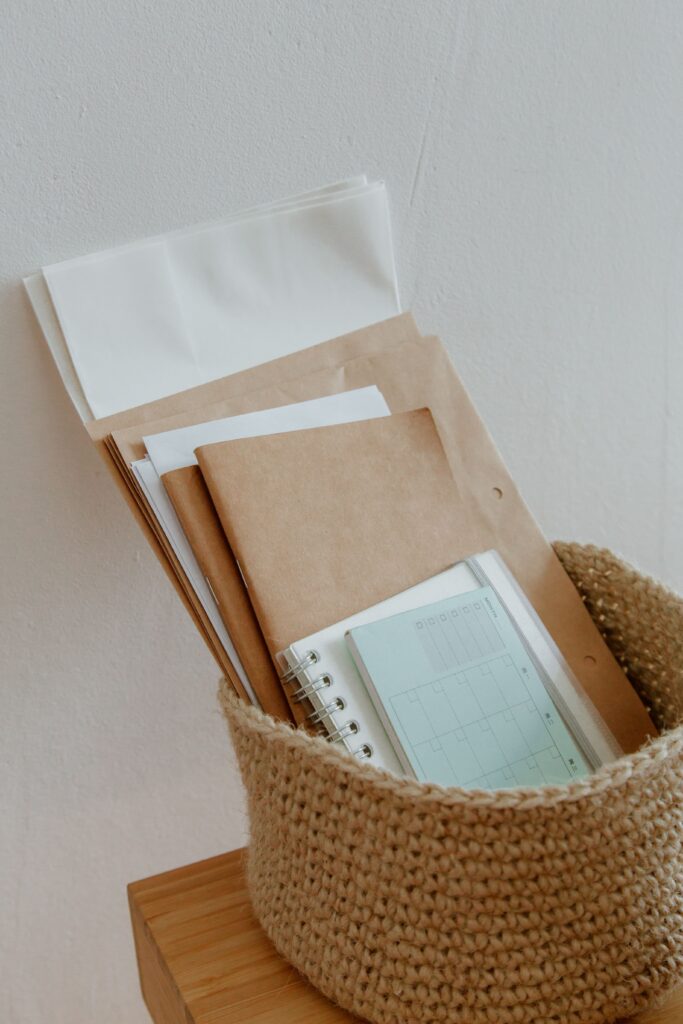
A tray, basket or magazine holder is enough. Use something you already own if you can.
This isn’t where paper goes to live forever. It’s simply a holding place until you decide what happens next.
Now you’ve replaced several scattered reminders with one place to deal with.
Use Three Categories for Paper Clutter: Trash, Act or Keep
You don’t need fifteen categories to sort everyday paperwork.
Start with three.
1. Trash
Be generous with this category.
Junk mail, expired coupons, unwanted flyers, empty envelopes, duplicate notices and anything else that serves no purpose can go immediately.
Recycle what you can, and shred documents containing information you wouldn’t want someone else to have.
And resist creating a Maybe pile.
Maybe is usually just clutter asking for an extension.
2. Act
This is the category most likely to cause trouble.
These are the papers that need something from you:
- A bill to pay
- A form to sign
- An appointment to make
- A statement to check
- Something to return
- A letter to answer
- Paperwork to submit
Keep these together in one designated Act spot.
Don’t file them just because filing feels productive. A beautifully filed bill that still needs paying isn’t particularly helpful.
Once the task is finished, the paper either gets discarded or moves into Keep.
3. Keep
This is for paperwork you have a genuine reason to retain.
Tax records, contracts, property documents, insurance records, warranties and other important documents may belong here.
The tricky part is distinguishing I need to keep this from I’m nervous about throwing this away.
One useful question is:
If I needed this six months from now, could I easily get another copy?
If you can download it from an account, retrieve it from an email or find the same information online, you may not need the physical paper.
This is exactly the kind of task that fits into a 20 Minutes Home Reset session — pick one pile, run it through Trash, Act, Keep, and stop when the timer’s up.
Receipts Can Quickly Become Paper Clutter
Receipts are tiny, which somehow makes it acceptable for them to occupy every drawer, handbag and coat pocket in the house.
Keep one when there’s an actual reason:
- You’re still within the return period
- It’s needed for a warranty
- It’s a business or tax expense
- Someone needs to reimburse you
Otherwise, most everyday receipts can go.
For receipts you need long-term, a digital copy may be more useful anyway. Thermal receipts can fade until you’re left carefully preserving a blank piece of paper.
Don’t Keep Paper Just Because It Looks Important
This is where a lot of unnecessary paper clutter survives.
Bank notices. Insurance explanations. Medical paperwork. Appliance manuals. Statements. Terms and conditions.
They arrive looking terribly official, so throwing them away feels vaguely irresponsible.
Before keeping one, ask a more specific question:
What would I need this paper for?
If your answer is clear, keep it.
If the statement is already available in your online account, you may not need another copy in a drawer. If an appliance manual is readily available online, you probably don’t need the paper booklet. If it’s simply a notice telling you something you’ve already dealt with, its job may be finished.
Some documents absolutely deserve permanent storage.
They just don’t all deserve it.
Keep Your Paper Filing Categories Broad
The paperwork that survives the first two categories needs somewhere sensible to go.
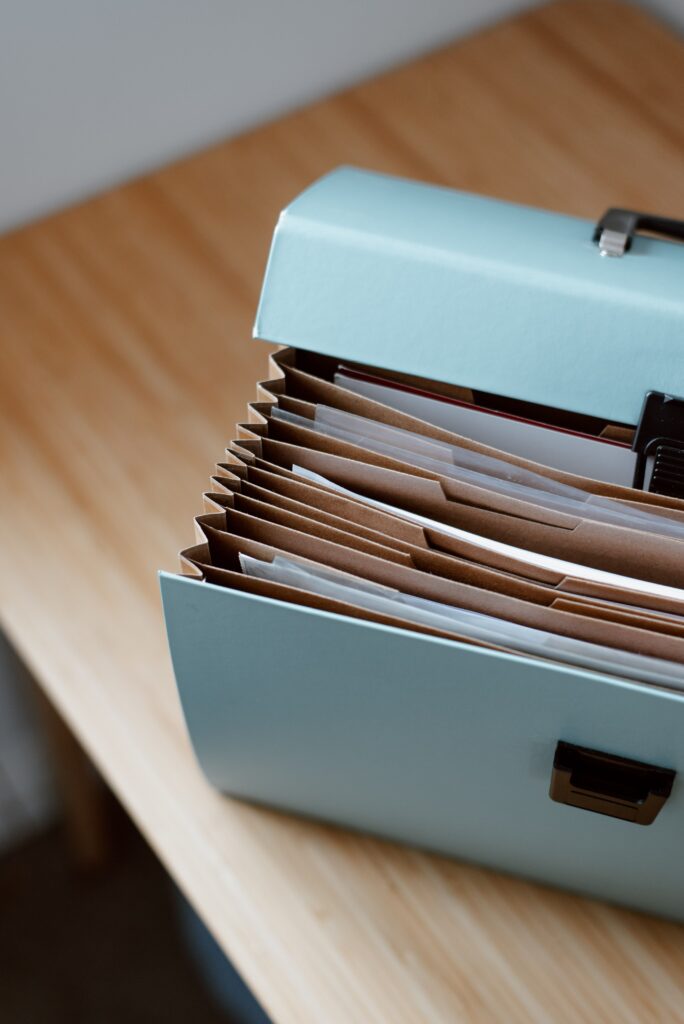
But don’t make your system so detailed that filing something becomes another decision.
A few broad categories might be all you need:
- Taxes
- Home
- Insurance
- Medical
- Financial
- Vehicles
- Warranties and major purchases
You can adjust these to suit your household.
There’s no prize for having 47 beautifully labeled folders.
In fact, too many categories can make things harder. Suddenly you’re standing in front of the filing cabinet wondering whether the dishwasher warranty belongs under Home, Appliances, Kitchen, Repairs or Warranties.
Keep it obvious.
The best organizing system isn’t the most elaborate one. It’s the one you actually continue using.
Prevent Paper Clutter Before You Put Down the Mail
This small habit can prevent a surprising amount of paper clutter.
When you bring in the mail, do a quick first pass before setting the whole stack on the counter.
Junk goes straight to recycling.
Something requiring action goes into your Act spot.
Something genuinely worth keeping can be filed.
You don’t have to pay the bill or fill out the form immediately.
You’re simply deciding where it goes.
Because “I’ll put this here for now” is how three envelopes become a pile you avoid looking at for the next two weeks.
Have a Weekly Paper Clutter Reset
Paper keeps entering the house, so managing paper clutter isn’t something you finish once and never think about again.
Give your Act pile a quick reset once a week.
Pay what needs paying. Sign what needs signing. Make the phone call. Scan what you want digitally. File what needs keeping. Get rid of everything that’s finished its job.
Once your paper is contained in one place, this shouldn’t require an afternoon.
Ten or fifteen minutes may be enough.
The important part is preventing your temporary Act spot from quietly becoming a permanent paper collection.
How to Tackle a Giant Paper Clutter Pile
If you’ve already accumulated months — or even years — of paper clutter, don’t begin by buying organizers.
And don’t spend the first hour designing the perfect filing system.
Start with the pile you already have.
Pick up one piece of paper and make one decision:
Trash. Act. Keep.
Then pick up the next one.
If the pile is enormous, do part of it today and another part tomorrow. Twenty minutes of actual sorting is more useful than three hours spent planning how you’re eventually going to sort it.
And don’t get distracted halfway through because you suddenly think you need new folders, a scanner or twelve matching storage boxes.
You don’t know what you need to organize until you’ve gotten rid of what you don’t need.
Reduce first. Organize second.
The Goal Isn’t a Paper-Free Home
The goal isn’t to eliminate every piece of paper from your life.
Paper will keep arriving. There will always be documents worth keeping and things that need your attention.
The goal is to keep paper clutter from turning into dozens of unfinished decisions scattered around your home.
Give incoming paper one place to land. Decide whether it’s Trash, Act or Keep. Deal with the Act pile regularly. Keep only what has a reason to stay.
It’s a simple system, which is exactly why it has a chance of working.
And a kitchen counter that’s just a kitchen counter again?
That’s a pretty good reward.