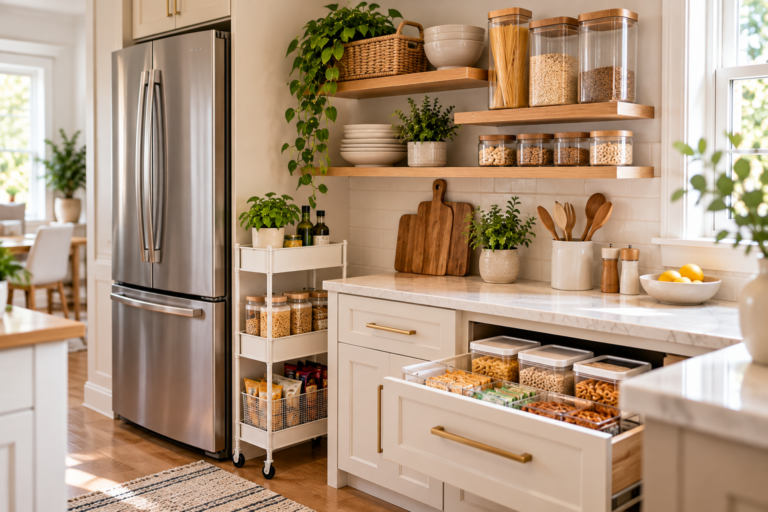
The Bulk-Buy Repackaging System That Actually Saves Me Money
Bulk buying used to make me feel very accomplished at Costco — and slightly defeated when I got home.
I had saved money, apparently.
I had also acquired a 10-pound bag of rice that didn’t fit on any shelf, an enormous package of something clipped shut and slowly going stale, and enough of certain ingredients to survive a minor emergency.
Bulk buying makes sense on paper. You pay less per unit, shop less often, and always have the basics at home.
But there’s a part nobody really talks about: buying in bulk only works if you can actually store and use what you bring home.
Otherwise, that bargain-sized bag sitting half-open in the pantry isn’t much of a bargain.
After plenty of trial and error, I’ve settled into a very simple system. I don’t decant everything into matching containers, and my pantry certainly doesn’t look like it has its own production crew.
I just repackage the things that actually benefit from it.
And that small distinction has made bulk buying work much better for me.
The Problem With Bulk Buying Isn’t Always the Quantity
Most of the time, I don’t mind having a lot of something I know we’ll use.
It’s the packaging that gets me.
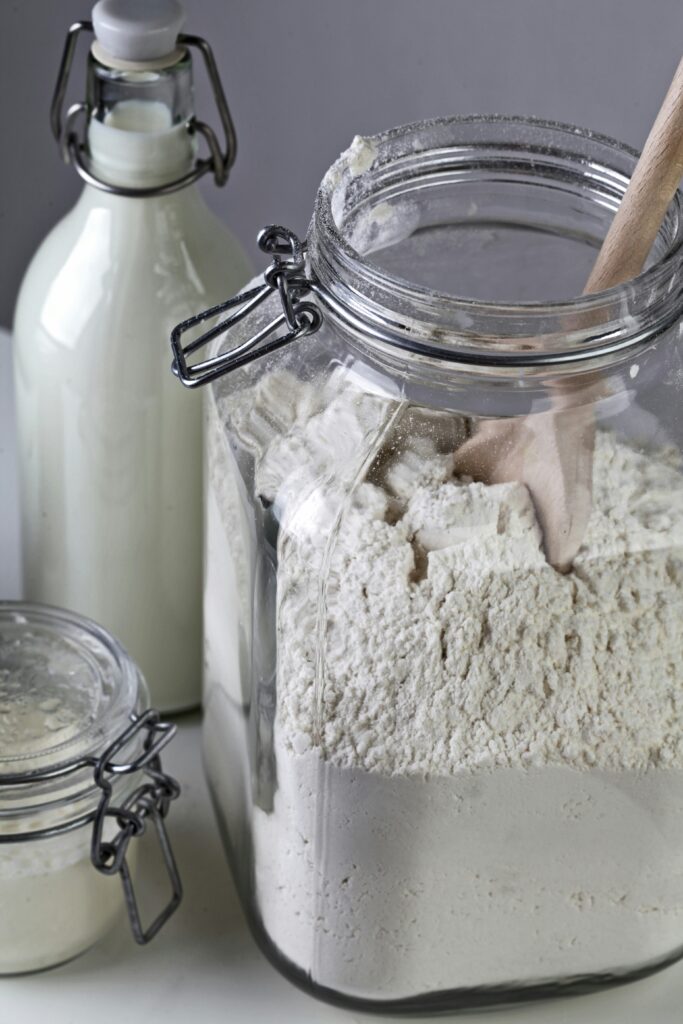
A giant bag of rice becomes awkward once it’s opened. Flour doesn’t always reseal particularly well. Large bags collapse into neighboring groceries and somehow take up twice as much room as they did when you bought them.
Then there are those enormous spice containers that seem like a brilliant deal until you realize you’ll be using approximately one teaspoon at a time for the foreseeable future.
The savings from bulk buying can be real.
But if food goes stale, gets forgotten, absorbs moisture, or you buy another one because you can’t see the first one buried in the pantry, some of those savings disappear.
So I stopped treating every bulk purchase the same.
My Bulk-Buying Rule: Repackage the Awkward Stuff
This is the entire system:
If the original bulk packaging makes something harder to store, harder to use, or harder to keep fresh, I repackage it.
If it doesn’t, I leave it alone.
Simple.
The giant bags of rice, flour, oats and other dry staples are obvious candidates. Once they’re opened, I divide them into smaller containers that are easier to handle and actually fit on my shelves.
I’m not trying to create a showroom pantry. I just want to be able to get a cup of rice without wrestling a bag the size of a small child.
Large Spice Containers Get Their Own Treatment
Spices are a slightly different case.
If I buy a large container of something we use frequently, that’s one thing. But some bulk spices take a long time to get through.
I don’t want to open that enormous container every single time I need half a teaspoon.
So I put a smaller amount into an everyday spice jar and keep the large container stored separately.
Besides being much easier to use, it means I’m not constantly opening the bulk supply and exposing the whole thing to humid kitchen air. Some spices can absorb moisture and start clumping, especially when they’re repeatedly opened around steam and cooking.
I refill the smaller jar when I need to.
One giant container. One small working supply.
Much easier.
Cooking Oil Works the Same Way
I do something similar with cooking oil.
Buying the larger size makes sense for us, but keeping a giant bottle next to the stove does not.
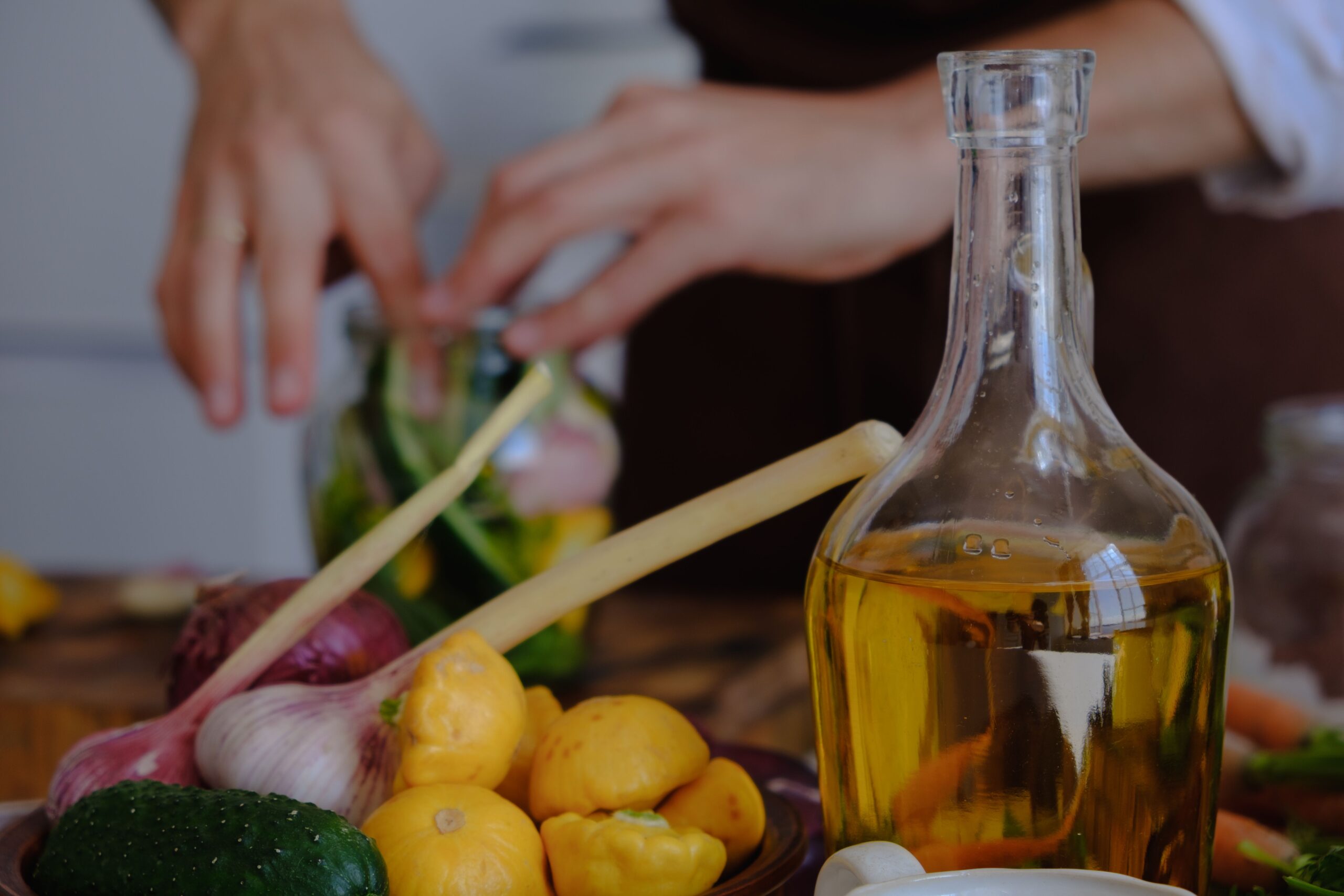
So the large bottle gets stored away, and I use it to refill a smaller dispenser beside the stove.
This may be an embarrassingly small household system to feel strongly about, but I do.
When I’m halfway through cooking dinner, I don’t want to lift a giant jug of oil and attempt a controlled pour into a frying pan.
The smaller bottle is easier to handle, looks better sitting out, and I still get the benefit of buying the larger size.
Some Bulk Buys Are Better Left Alone
This is where I think repackaging systems can get a little out of hand.
Not everything needs another container.
I buy toilet paper and paper towels in bulk. They stay exactly as they came.
Cleaning supplies? Same.
If something is already packaged in a way that’s easy to store and use, transferring it somewhere else isn’t organization. It’s just giving myself another job.
And I have enough jobs.
The point of this system is to make bulk buying easier, not to spend Sunday afternoon transferring perfectly functional products into prettier boxes.
Three Questions I Ask Before Bulk Buying
I’ve also become a little more selective about what earns the right to come home in Costco proportions.
Before I buy something in bulk, I try to ask myself three things:
Will we actually use all of this?
A lower price isn’t a saving if half of it eventually gets thrown away.
Do I have somewhere to put it?
This sounds ridiculously obvious until you’re standing in the kitchen wondering where exactly you thought 24 rolls of paper towels were going to live.
Will this package still be practical once I open it?
If the answer is no, I already know I’ll need to divide it, refill a smaller container, or find another way to store it.
Those three questions have stopped quite a few “but it’s such a good deal” purchases from making it into my cart.
What This Bulk-Buying System Actually Solved
The biggest difference is that I can see what we have.
The awkward staples have proper places instead of disappearing inside oversized bags, which means I’m less likely to buy something we already own.
Food stays fresher because opened bags aren’t sitting around badly clipped shut.
Cooking is easier because the things I reach for regularly are in sizes I can actually handle.
And the pantry feels calmer.
That last one surprised me.
There’s something mildly irritating about opening a cupboard and having a giant bag fall toward you while you’re trying to find the flour. Fix enough of those tiny annoyances and the whole kitchen starts working better.
My Simple Rule for Bulk Buying
If you want to try this, don’t go out and buy twenty matching containers.
Start with the bulk item that annoys you most.
The giant bag that won’t fit on the shelf. The spice container you open constantly even though it’ll take two years to finish. The oversized bottle you have to haul out every time you cook.
Fix that one thing first.
Then leave everything that’s already working perfectly well alone.
My system really comes down to this:
Repackage what is awkward. Refill what you use regularly. Leave everything else alone.
For me, that’s what makes bulk buying actually save money instead of simply filling the pantry with more stuff.
A useful pantry doesn’t need to be Pinterest-perfect.
It just needs to stop fighting you every time you open the door.